
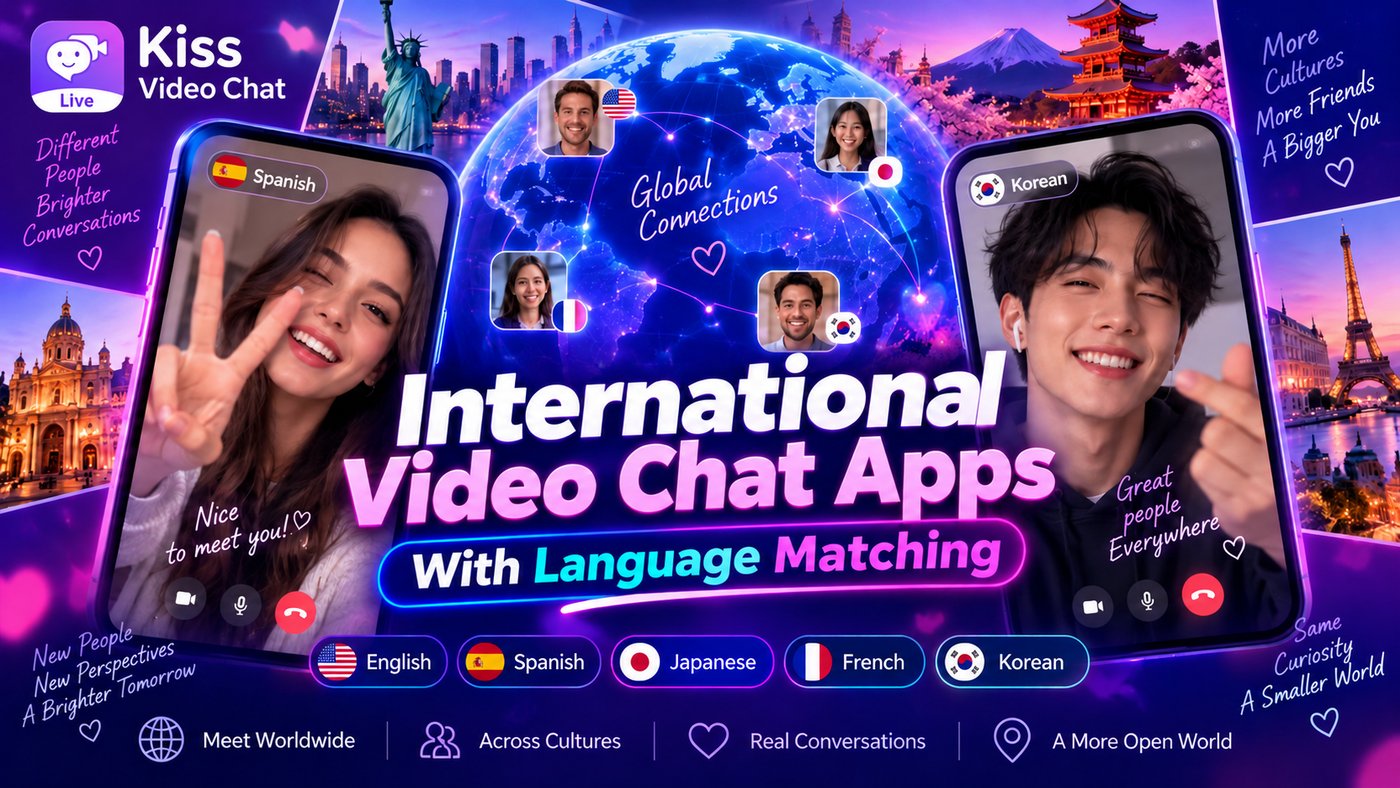
International video chat can mean at least two different things: meeting anyone from another country, or finding someone who speaks a language you want to practice. A country filter may help with the first. A language preference or visible profile information may help more with the second. Those tools should not be treated as interchangeable.
What to look for in a language-focused app
Start with discoverability. Can you see someone's language before calling, or do you need to enter a conversation to find out? Does the app offer translation, language preferences or country-based matching? And does it cost anything to use those controls? The answers matter more than a generic “connect worldwide” claim.
Kiss Live Chat describes showing language and interest details when browsing people online. This is useful if you want a conversation with some context before you say hello. Its published experience does not establish automatic real-time speech translation.
Azar emphasizes global discovery. Its official Lounge guide documents filters including country and language, and its Web Gems guide describes charges for certain region/gender preferences. Review the version you actually use before buying anything.
Chatroulette advertises country matching, which can be relevant when you want to meet people from a region. A country is not a reliable guarantee of what language any person speaks.
Chitchat.gg offers interest and region matching plus both text and video modes. Text can be a useful bridge if you're nervous about speaking a new language.
Use the first minute well
Begin with an easy question: “Is English or Turkish easier for you?” Then explain what you are hoping for: casual conversation, practicing a language, or meeting new friends. Ask whether the other person wants the same thing. A good conversation is voluntary; nobody is obligated to provide free language lessons.
Keep cultural assumptions out of your opener. A person in a particular country might be multilingual, speak a different first language, or simply not feel like practicing with strangers that day.
Language practice without turning a stranger into a tutor
A helpful approach is to ask permission first: “I'm practicing Hebrew—would you be comfortable speaking slowly for a few minutes?” If the other person agrees, choose one small topic such as the weather, a favorite city or weekend plans. Then switch to ordinary conversation instead of repeatedly correcting every word. The goal is an enjoyable exchange, not a surprise lesson.
Try a bilingual opening message if the app supports text. Keep it short enough to read on a phone screen. If a translation feature is offered, find out whether it works for typed chat or speech; do not assume both. If your preferred language is rare in the current pool, flexible timing and a broader selection of countries may help more than an additional filter.
Explore Kiss Live Chat for language-aware discovery, or read its video chat with strangers guide.
A few more answers
Frequently asked questions
Is a country filter a language filter?
No. Country can suggest a likely language but does not identify an individual's preferences or fluency.
Does Kiss let people explore language details?
Its website explicitly describes browsing online profiles with language and interest information.
Do all international video chat apps translate live speech?
No. Check whether a service translates text, speech or neither; these are distinct capabilities.