Introduction
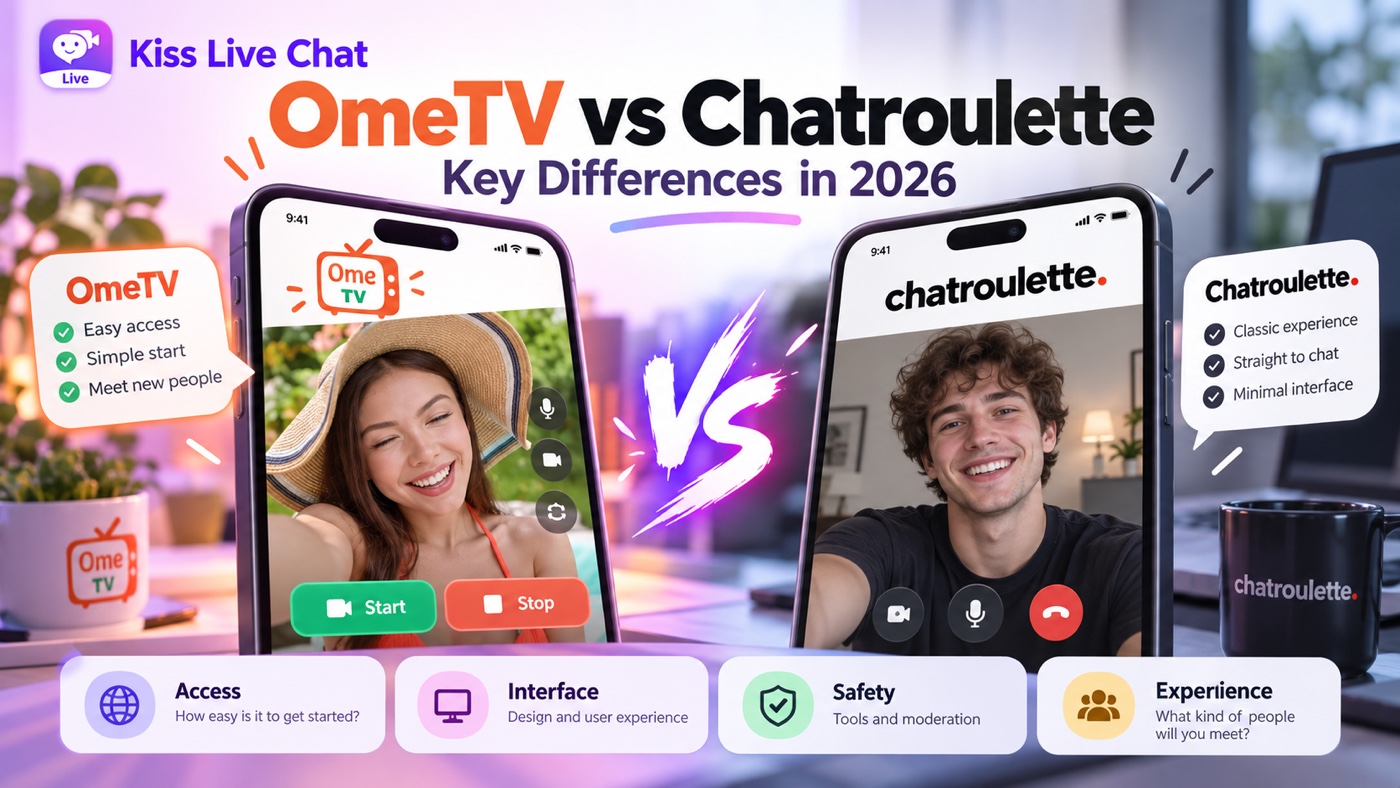
OmeTV and Chatroulette belong to the same broad category, but they represent different generations of random video chat. Chatroulette is closely associated with the original webcam-roulette model, while OmeTV became a major post-Omegle option with strong mobile visibility and a large global matching audience.
The useful comparison is not nostalgia versus popularity. It is how each service handles access, mobile use, matching, filters, moderation, and the overall amount of structure around a random conversation.
OmeTV vs Chatroulette at a Glance

| Area | OmeTV | Chatroulette |
|---|---|---|
| Product feel | Modern global random chat | Classic roulette-style webcam chat |
| Mobile emphasis | Strong | Available, but the brand is strongly web-associated |
| Matching | Fast stranger matching | Classic next-person roulette flow |
| Identity | Relatively light | Relatively light |
| Main decision | Mobile/global convenience | Traditional random-chat simplicity |
Users should verify current account, pricing, filter, and platform rules directly because both services can update features without preserving older comparison assumptions.
Access and Startup Flow
A random-chat product succeeds or fails partly on how quickly a user reaches the first conversation. OmeTV is designed around a relatively direct matching flow and has strong mobile recognition, while Chatroulette has historically emphasized immediate browser-based stranger matching.
The details of login and platform access can change, especially across app and web versions. Compare the actual path on the device you intend to use rather than relying on old memories of either service.
If you care primarily about no-download access, browser quality may matter more than the brand name itself. Test the actual web flow on your device rather than relying on a service’s broader reputation.
Matching Experience
OmeTV is built around fast global matching with a modern interface and broad geographic use. Chatroulette’s identity is even more strongly tied to the pure roulette concept: one stranger, then another, with minimal narrative around the connection.
Both products can feel repetitive if you want persistent social relationships. They are strongest when you value discovery and the ability to move on quickly.
The difference is mostly in presentation and ecosystem rather than a completely different interaction model. Both still depend on the same fundamental decision: stay with the current stranger or move to the next one.
Mobile vs Web
OmeTV’s strong mobile presence makes it a natural consideration for users who spend most of their time on a phone. Chatroulette remains deeply associated with web use, even though modern access options have evolved beyond the original desktop webcam era.
On mobile, check portrait layout, camera switching, skip controls, permission flow, and app-store availability in your region. On desktop, compare browser performance and how much screen space the interface gives to the conversation itself.
The better option is the one that feels native on your primary device. A user who chats almost entirely on a phone may reach a different conclusion from someone who prefers a laptop browser.
Filters and Geographic Control
Random-chat platforms often add country, language, or other filters to reduce mismatch, but these features may vary by platform, plan, or region. Do not assume the filter set is permanent.
OmeTV’s global user base makes language and location context especially relevant. Chatroulette’s more traditional roulette identity may appeal more to users who want the surprise of a less structured match.
If a filter is essential to your experience, confirm both availability and cost before choosing. Filter policies can change independently from the basic random-matching product.
Moderation and Community Rules
Both services publish rules and use moderation systems, but neither can guarantee that every stranger will behave appropriately. Look at how easy it is to report, skip, or exit, and whether age policies are clearly stated.
The random-chat category is inherently exposed to inappropriate behavior because users meet with little context. Practical safety controls matter more than broad claims such as “safe” or “moderated.”
Users should also keep personal information private and avoid treating a friendly match as automatically trustworthy. The platform’s moderation tools support the user; they do not replace personal boundaries.
Rules and Camera Expectations
OmeTV’s current rules are unusually detailed about what must remain visible on camera and what kinds of content or camera behavior can lead to enforcement. That makes its moderation expectations more explicit than the minimal “be respectful” language used by many stranger-chat services.
Chatroulette’s historical identity is looser and more closely tied to the classic roulette concept, but users should still check its current rules, sign-in flow, and moderation documentation before assuming the service operates exactly as it did years ago. For people choosing between the two, the clarity and strictness of conduct rules may matter as much as matching speed.
Which One Fits Which Use Case?
OmeTV may feel more natural to users who want a contemporary, global, mobile-oriented random-chat service. Chatroulette may appeal more to people who prefer the classic browser-roulette identity and a product that is strongly associated with the original random webcam format.
Neither description makes one universally better. The decision depends on device, desired structure, filters, and how much you value the historical simplicity of the roulette model.
How to Compare Them With Other Platforms
If neither experience is quite right, use the same criteria across the wider category: startup friction, account requirements, free access, filtering, mobile quality, moderation, and privacy.
Our random video chat sites guide explains those criteria before you move into brand-level comparisons, while the Best Random Video Chat Sites page places named services together.
Conclusion
OmeTV and Chatroulette share the same basic promise but package it differently. OmeTV is closely associated with a modern global and mobile-oriented experience, while Chatroulette remains one of the clearest expressions of classic random webcam matching.
Choose based on how you want to access the service, how much filtering you need, and whether you prefer a modern mobile ecosystem or a simpler roulette identity. Then verify the current rules and features directly, because random-chat products change faster than their reputations.