Introduction
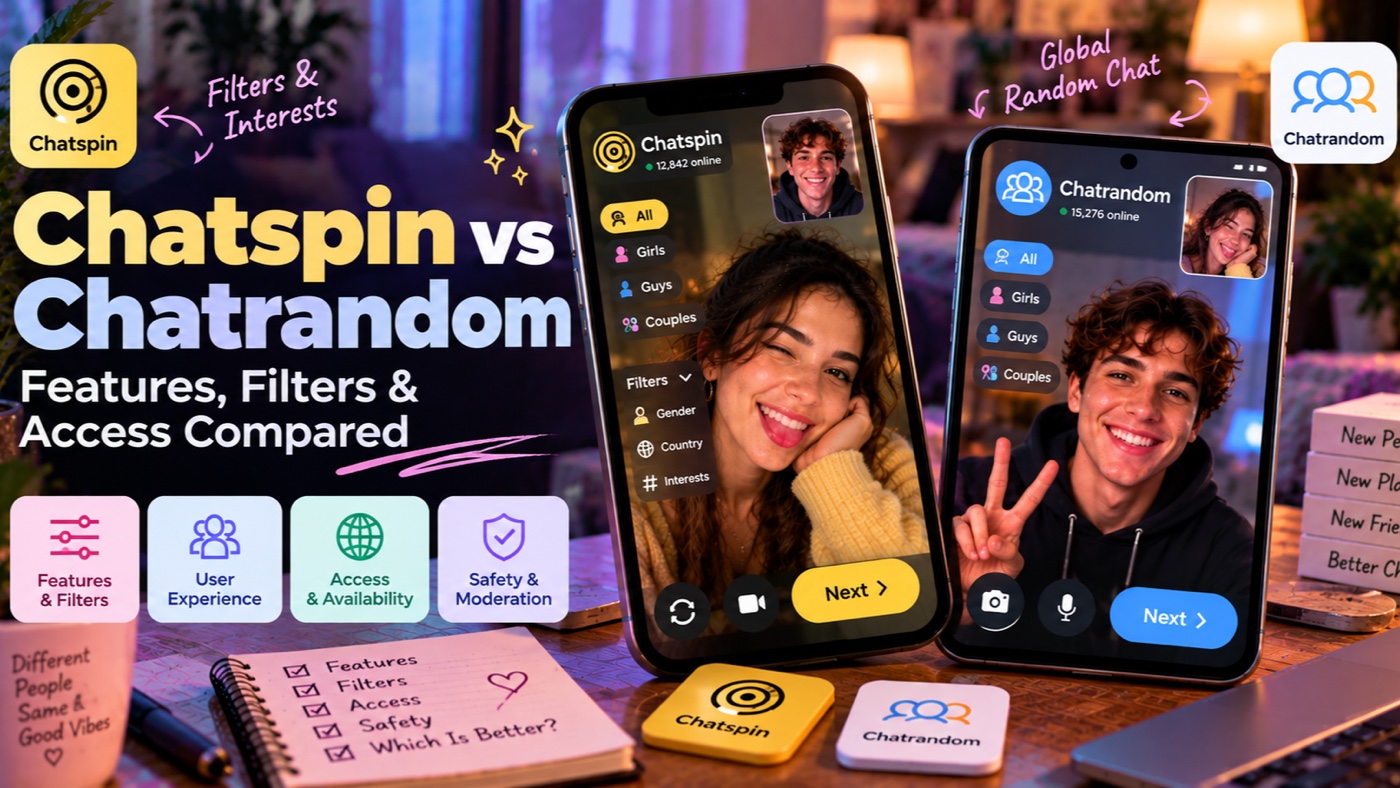
Chatspin and Chatrandom are closely related in how users think about them: both belong to the classic random-video-chat category, both emphasize quick stranger matching, and both add filters or premium options around the basic roulette loop.
The useful comparison is therefore in the details. Browser access, app support, signup requirements, filter pricing, interface design, and moderation can change which service feels simpler or more targeted for a particular user.
Chatspin vs Chatrandom at a Glance
| Area | Chatspin | Chatrandom |
|---|---|---|
| Product type | Random video chat with filters/effects | Random video chat with filters and multiple modes |
| Access | Web plus mobile presence | Web plus mobile presence |
| Core experience | Fast stranger matching | Fast stranger matching |
| Premium focus | Filters and enhanced controls | Filters and premium matching controls |
| Main decision | Interface/effects/filter fit | Mode/filter/access fit |
Because pricing and feature bundles change, users should confirm current premium details directly instead of relying on an old static price comparison.
Browser Access and Startup Flow
Both services have long competed in the browser-based random-chat space, making startup friction an important part of the experience. Users should compare how quickly they reach the first match, whether an account is required for basic use, and whether upgrade prompts interrupt the free flow.
Browser access is especially useful for occasional users who do not want another app. Frequent mobile users may care more about the native app experience and how consistently settings or subscriptions carry across devices.
The better startup flow is the one that matches how you plan to use the product, not the one with the largest homepage button. Test whether the free experience reaches a real conversation quickly on the device you intend to use.
Matching and Randomness
Both platforms preserve the core roulette idea: connect with someone new, continue if the interaction works, and move on when it does not. The experience becomes less purely random when users add filters or enter more targeted modes.
This is where the products can feel different despite similar foundations. One user may value a straightforward global queue, while another cares more about narrowing by gender, country, or other preferences.
The more selective you become, the more important it is to understand which filters are free and which are premium. A service can feel generous for pure random matching and expensive for highly targeted matching at the same time.
Gender and Location Filters
Gender and location filters are among the most valuable features in random chat, so they are frequently monetized. Users should not assume that seeing a filter in the interface means it is available without payment.
Compare whether the platform lets free users set any preference, how premium access is priced, and whether the filter is applied to every match or only certain modes.
If you do not care about selective matching, the value of a premium tier may be much lower. If filtering is the main reason you use the service, it may dominate the decision.
Mobile Apps and Phone Use
Both brands have mobile visibility, but users should judge the app experience independently from the desktop site. Camera switching, portrait video, skip controls, billing, notifications, and permission handling all matter more on a phone.
If you prefer not to install an app, check whether the mobile browser experience is fully usable rather than assuming the desktop site simply scales down.
For a broader framework, random video chat on mobile explains what to compare beyond the existence of an app-store listing.
Chatspin’s Current Free Core as a Reference Point
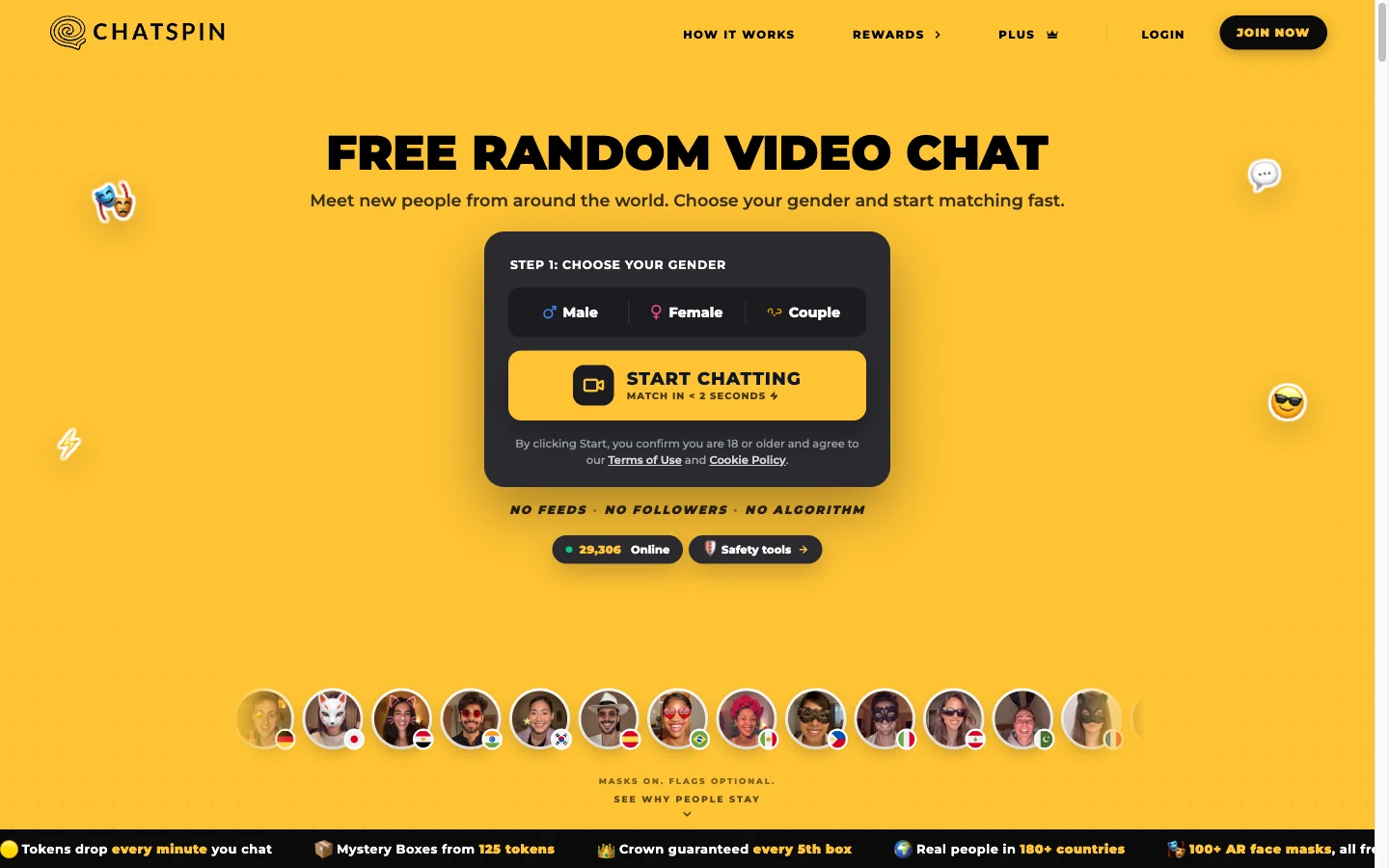
Chatspin’s current official pages describe basic random video and text chat as free for adults 18+, with no signup required to start. They also document browser and mobile access, country and gender controls, AR face masks, and safety tools such as skip, report, and block; the exact premium boundary should still be checked at the time of use because the product has a separate Plus program and evolving reward features.
That gives users a useful baseline when comparing Chatrandom: verify whether the same controls are available before signup, which filters require premium access, and whether the mobile browser and app experiences expose the same core functions. The comparison becomes much more useful when it is grounded in the free flow a new user actually sees.
Free vs Premium
The free experience should let users understand the core product. Premium plans are most useful when they add clearly defined control rather than making basic matching feel deliberately frustrating.
Check recurring billing, trial language, filter restrictions, and any in-app purchases before subscribing. The random-chat category changes pricing frequently, so current official information matters more than a year-old comparison.
A useful rule is to test the free loop first, then decide which missing feature is actually worth paying for. That prevents a long feature list from turning into a subscription you barely use.
Moderation and Reporting
Both products operate in a category where inappropriate behavior can appear even when rules are clear. Users should know where report, skip, and block controls are located and what age policies apply.
No moderation system makes live stranger interaction risk-free. Treat personal information carefully and leave immediately when someone becomes abusive, sexual without consent, financially manipulative, or otherwise uncomfortable.
A strong product makes that exit easy rather than asking the user to navigate away from the conversation. In live stranger chat, safety controls need to be closer than premium settings.
Which Experience Fits Which User?
Chatspin may appeal to users who like its interface, filters, and visual-effect style, while Chatrandom may fit users who prefer its particular mix of modes, matching, and filtering. The differences are meaningful but not large enough to produce one universal answer for every user.
The choice comes down to which filter set, access method, and interface feels better on your device. Users who want less structure may prefer a simpler browser-based service, while filter-heavy users may care more about premium controls.
Conclusion
Chatspin and Chatrandom are variations on the same basic product idea: fast random video matching with additional controls layered around the core loop. The meaningful differences are in filter availability, premium boundaries, mobile experience, and interface design.
Try the free experience first, identify which control you actually miss, and compare current pricing before paying. The platform that fits you is the one whose paid and free boundaries align with the way you want to use random chat.