Introduction
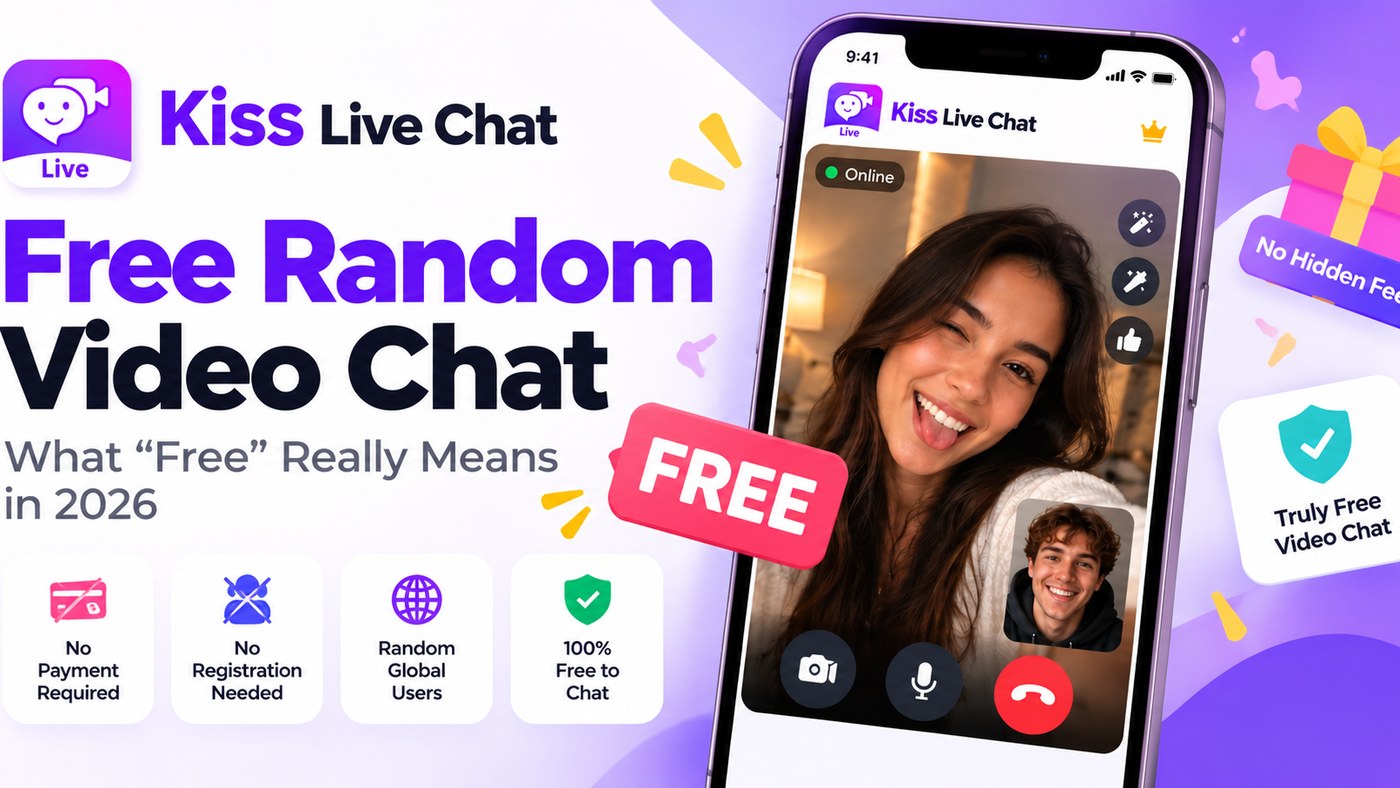
“Free random video chat” sounds simple: open a site, meet someone, and pay nothing. In practice, the word free can describe several different products, from genuinely free basic matching to services that are free only until you want a gender filter, location preference, extra minutes, or another feature that makes the experience more useful.
The goal of this guide is not to argue that every paid feature is bad. It is to help you understand what a platform means when it says “free,” which parts of the experience reasonably should be available without payment, and where freemium pricing usually appears.
Quick Answer: What Should Be Free?
For a service to feel meaningfully free, you should generally be able to enter the core matching loop without paying. That means starting a random match, talking, moving to the next person, leaving, and using essential safety controls should not depend on a premium upgrade.
| Feature | Reasonable to expect free? | Often premium |
|---|---|---|
| Basic random matching | Yes | |
| Skip / Next | Yes | |
| Leave a conversation | Yes | |
| Report / Block | Yes | |
| Gender filter | Often | |
| Country or region filter | Sometimes | Often |
| Priority matching / boost | Yes | |
| Ad removal | Yes | |
| Virtual gifts / extras | Yes |
A platform can still be useful if some advanced features cost money. The important part is whether the free core remains functional after the first few minutes.
What “Free” Can Mean in Random Video Chat
The first model is completely free core access, where basic matching remains available without payment and the platform may rely on ads or optional extras. The second is free-to-start access, where you can enter and experience the service before a paid limit appears. The third is freemium, where random matching stays free but more selective controls sit behind a subscription or purchase.
Some services use credits or token systems rather than subscriptions. That can work well for occasional premium features, but it also makes the real cost harder to compare because users are paying in an internal currency rather than a clear monthly price.
When a site says “free,” the useful follow-up is therefore: free for what, and for how long? That question is more revealing than the label because it forces the platform’s actual free boundary into view.
The Five Most Common Costs Hidden Behind a Free Label
The first common cost is selective matching. Gender and location filters are easy to understand and highly desirable, so they are natural premium features. The second is priority or faster matching, where paying users are moved ahead in the queue or given additional exposure.
The third is credits or tokens, especially on services that mix random chat with broader social-discovery features. The fourth is recurring premium plans that unlock several filters or quality-of-life improvements at once. The fifth is advertising friction, which does not cost money but can make a technically free service feel expensive in attention.
A service does not need to avoid every one of these models. It does need to make the boundary between free and paid understandable before you have invested time in the product.
Free to Start vs Free to Keep Using
“Free to start” is a useful phrase because it describes access without promising that every feature is free forever. A platform can let you enter a random chat immediately and still charge later for filters, boosts, or a more targeted experience.
The more important question for casual users is whether basic matching remains available. If the service becomes unusable without payment after a short trial, that is very different from a platform where premium features are optional enhancements around an otherwise functional free core.
When you compare options, test the experience without upgrading first. You will learn quickly whether the free tier is a real product or mostly a preview of the paid one.
Does Free Mean No Signup?
No. Pricing and account requirements are separate choices.
A service can be free but require an account because it supports persistent profiles, preferences, contacts, or other social features. Another can offer random video chat without registration while still charging for optional filters later. A third may combine no signup with a fully free basic experience.
This matters because users often search for “free” when what they really dislike is friction. If your priority is instant access, check signup and download requirements in addition to price.
Does Free Mean No Credit Card?
A free core experience should not normally require a credit card just to see whether the service works for you. If a platform asks for payment information before you can access something advertised as free, read the terms carefully and check whether you are starting a trial that may renew automatically.
The same caution applies to app-store subscriptions and premium trials. A short free period can still be useful, but it should be obvious when billing begins, what the renewal cadence is, and how to cancel.
Transparency matters more than the presence of a paid plan. Users can make good decisions when the price is clear.
Ads, Tokens, and the Other Kinds of Cost
Money is only one kind of friction. A platform may be technically free but interrupt every few matches with ads, push upgrade prompts into the main flow, or make the free experience slow enough that the paid tier feels mandatory.
It helps to think about three costs at once: money, time, and attention. A platform may charge nothing but require a long registration flow. Another may start instantly but interrupt the conversation loop with aggressive upselling.
The best free experience is not necessarily the one with zero monetization. It is the one where the free core remains understandable and usable without constant pressure to upgrade.
What Should Never Be a Premium Safety Feature?
Essential safety controls should not depend on a paid plan. Leaving a conversation, reporting abusive behavior, blocking where the product supports blocking, and understanding basic community rules should remain available regardless of subscription status.
Advanced identity or verification features can be more complicated, but users should never need to pay simply to escape a bad interaction. Random chat is inherently unpredictable, so quick exits and reporting are part of the basic product, not luxury extras.
If a service makes safety tools difficult to find or ties basic protection to payment, that is a more serious problem than whether it charges for a country filter.
How to Check a Free Video Chat Service Before You Commit
Look for a pricing or premium page, then check which features are named as paid. Search the interface for tokens, credits, trial language, subscription renewal, or premium-only filters before you assume the experience will stay free.
Also pay attention to what happens after the first few matches. Some paywalls appear only when you try to narrow the match pool or continue a particular interaction pattern.
If you are comparing several services, use the same checklist for each one. That makes it much easier to distinguish a genuinely useful free core from a platform that uses free access mainly as an acquisition funnel.
Where Kiss Fits Into the Free-vs-Paid Decision
Kiss should be judged by the same criteria as any other service: what users can access without payment, which features are optional, how clearly the product communicates that boundary, and whether the free experience is useful on its own. The point of a comparison is not to assume the home product wins; it is to make the tradeoffs visible.
That same logic applies when you compare platforms on our Best Random Video Chat Sites page. Start with the free core, then decide whether the paid extras matter to your use case.
Conclusion
Free random video chat is not one business model. It can mean completely free access, free basic matching with paid filters, free-to-start use, ad-supported access, or a token system layered on top of a free core.
The best way to compare platforms is to look beyond the word “free.” Check what happens after the first match, which controls cost money, whether signup or a credit card is required, and whether the service is still useful before you pay. A free tier is most valuable when the boundary between free and paid is clear before you reach it.