Introduction
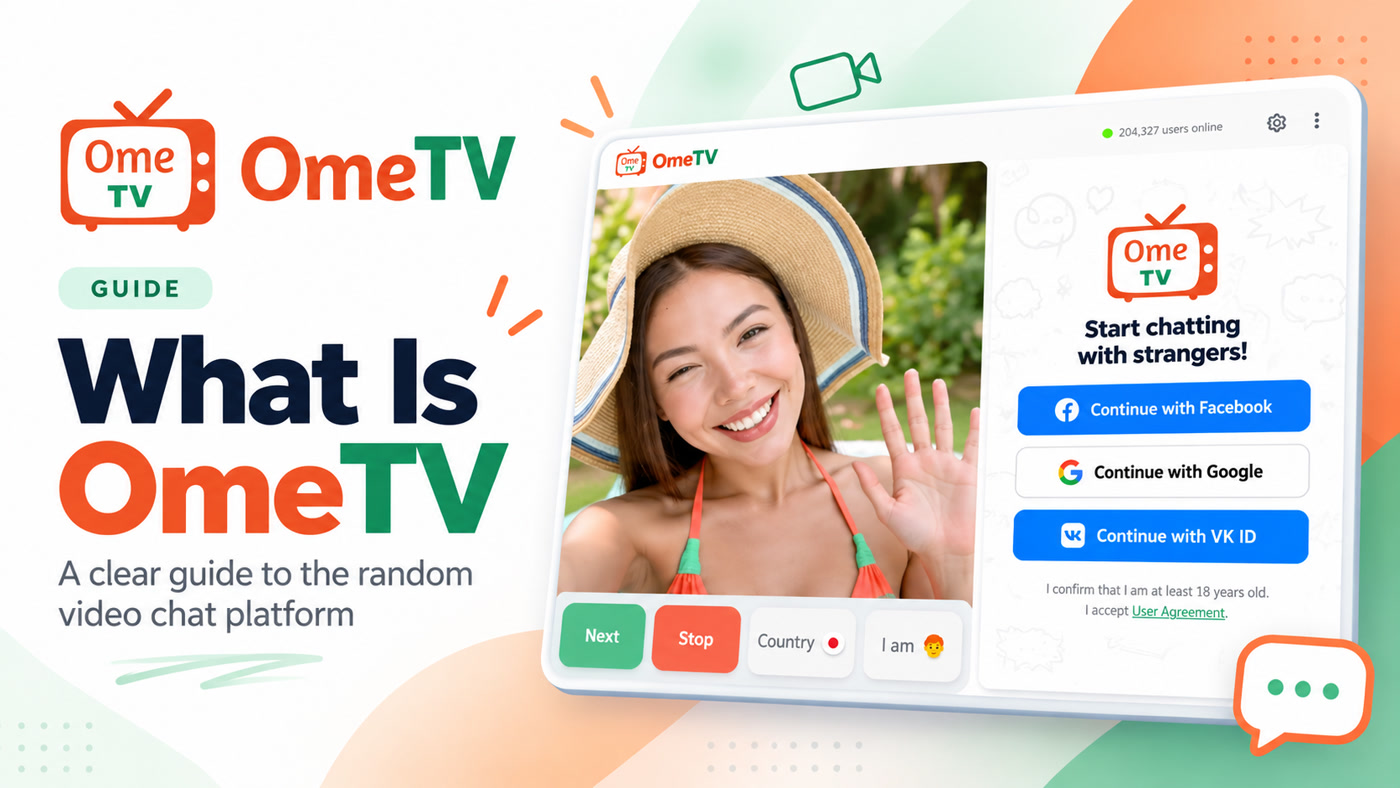
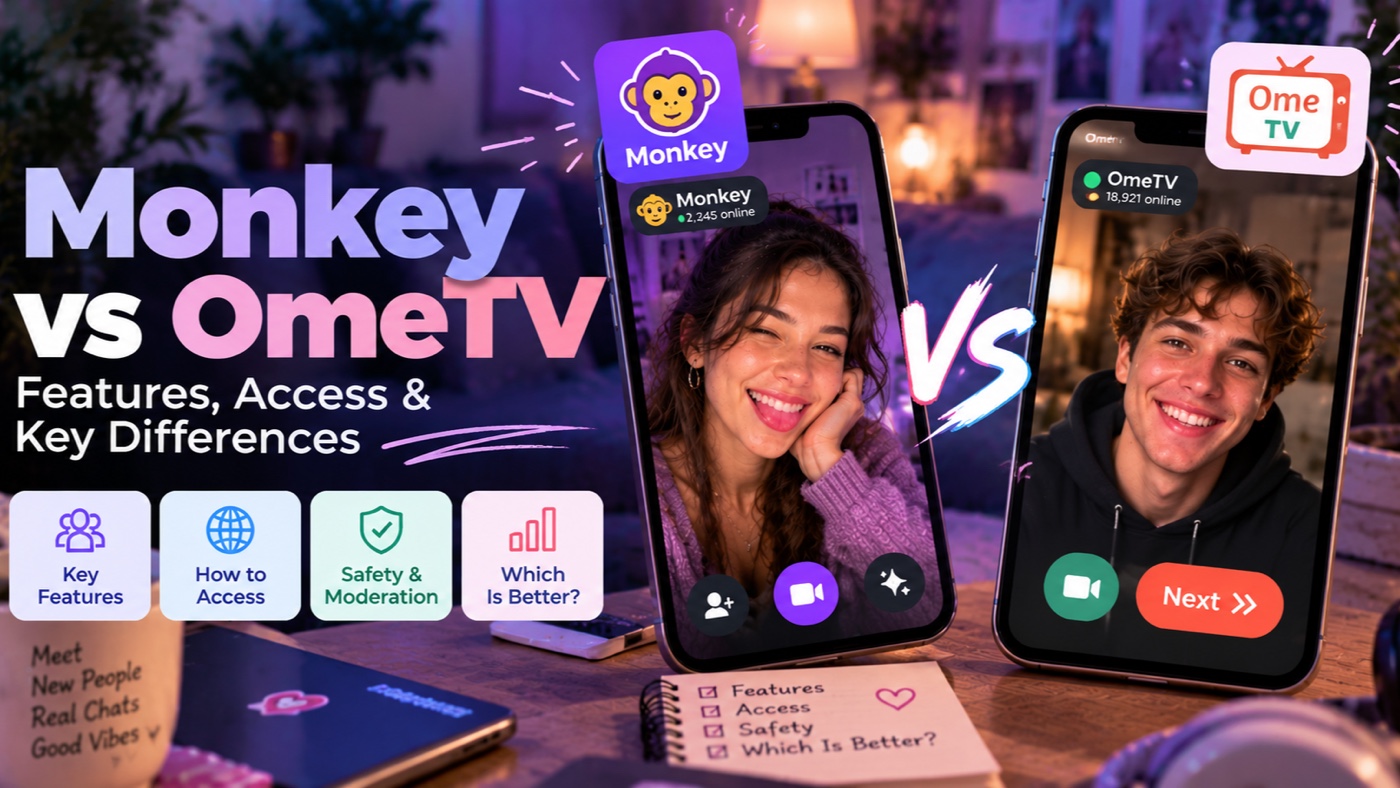
Monkey and OmeTV both help people meet strangers over live video, but they do not feel like the same product. Monkey leans more heavily into mobile social discovery and interest-driven interaction, while OmeTV is closer to the classic high-volume random video chat model with a straightforward match-and-skip loop.
The useful comparison is therefore not “Which one wins?” It is how each service approaches access, identity, matching, mobile use, filtering, and moderation, and which approach fits the experience you actually want.
Monkey vs OmeTV at a Glance
| Area | Monkey | OmeTV |
|---|---|---|
| Core identity | Mobile social-discovery style | Classic random video chat |
| Main interaction | Short live video introductions | Direct random matching |
| Account/profile feel | More social/profile-oriented | Lighter random-chat flow |
| Matching context | Interest/social cues are more visible | More immediate stranger matching |
| Mobile emphasis | Strong | Strong |
| Best comparison question | Do you want a social-discovery feel? | Do you want a simpler roulette-style flow? |
Features and policies change, so users should confirm current pricing, account rules, and availability directly on each service before relying on any static comparison.
Matching Style
Monkey’s appeal is the feeling of rapid introductions inside a more social mobile environment. The product has historically emphasized quick interactions, interests, and discovery rather than presenting itself only as an anonymous webcam roulette clone.
OmeTV feels more direct. Users enter a matching experience and move between strangers with less emphasis on building a social identity around each interaction.
That difference changes the pace. Monkey can feel closer to a discovery app, while OmeTV feels closer to a utility for meeting the next available person.
Account and Identity
The amount of identity attached to a session matters if you care about anonymity or persistence. Monkey’s product design has generally included more social context and profile-like elements, while OmeTV’s core experience is more focused on the live match itself.
Users should check current account requirements because these services can change login, platform, or region-specific rules over time. The key question is not simply whether an account exists, but how much the product expects you to maintain an identity between conversations.
Mobile Experience
Both platforms are strongly associated with mobile use. Monkey is particularly shaped by short-form mobile behavior, while OmeTV also supports a broad mobile audience and a simple next-match interaction.
For mobile users, compare camera switching, portrait layout, skip controls, permission handling, and whether the app or web experience works better on your device. A platform can be popular on mobile and still feel very different depending on whether you prefer a fast social feed or a stripped-back video-chat loop.
Filters and Control
Filters can include language, country, gender, interests, or other preference signals depending on the service and current plan. Some controls may be free while others are premium, and the exact boundary can change.
Monkey’s social-discovery orientation makes interest context especially relevant, while OmeTV’s appeal has traditionally been broad global matching. If selective control matters to you, check current filter availability and pricing rather than assuming it is included.
Moderation and Safety
Both services publish rules and use moderation mechanisms, but live random chat remains unpredictable. Users should know how to skip, report, and block where applicable before spending much time on either platform.
The best comparison is practical: how easy is it to leave a bad interaction, how visible are the rules, and what age policies apply? No platform should be treated as risk-free simply because it has moderation.
Which Experience Fits Which User?
Monkey is a more natural fit for people who enjoy a mobile social-discovery feel and do not mind more context around the person they are meeting. OmeTV may fit users who want a more direct random-chat loop and care less about persistent social framing.
Those are not rankings. They are different product philosophies. The right choice depends on whether you want discovery that feels social or matching that feels closer to classic random video chat.
Which Details Should You Verify Before Choosing?
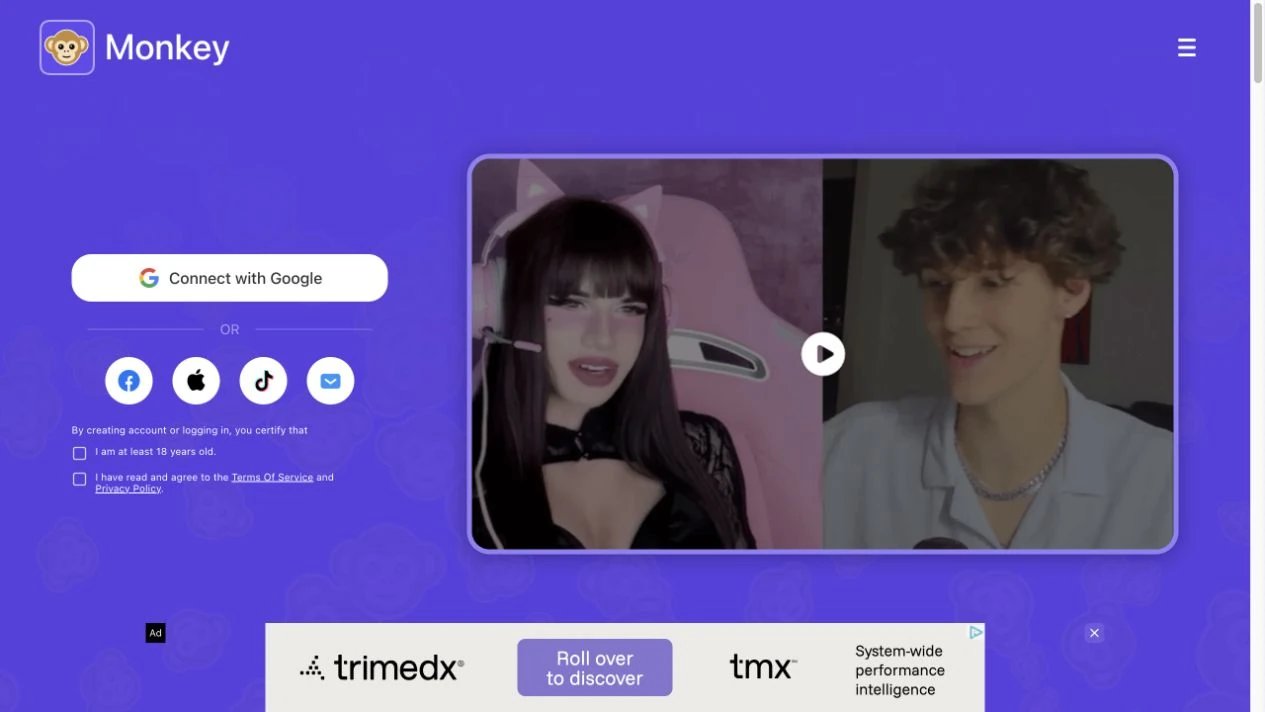
Because random-chat products change quickly, verify the current account flow, supported devices, filter availability, subscription terms, and age policy on the official product pages before treating any comparison as permanent. Monkey’s current site, for example, describes a one-tap social login and browser access for iOS and desktop alongside Android availability, while OmeTV publishes detailed adult-only rules and a strict camera-content policy.
Those details matter because they affect the experience more than a generic feature checklist. A user who dislikes social login may react differently to Monkey’s identity model than someone who sees it as useful bot friction, while OmeTV’s detailed conduct rules may appeal to users who prefer a more tightly specified live-video environment. Read the current rules as part of the product, not as legal material you can ignore until something goes wrong.
Where Kiss Fits Into the Comparison
Kiss should be compared against both on the same practical dimensions: startup friction, matching flow, mobile quality, safety controls, and how much profile or account structure the experience requires. The point is not to copy either product but to understand which user need each one serves well.
For a broader view across platforms, the Best Random Video Chat Sites page places several services side by side rather than forcing every comparison into a two-brand decision.
Conclusion
Monkey and OmeTV both connect strangers over live video, but they emphasize different experiences. Monkey leans toward mobile social discovery and interest-driven interaction, while OmeTV feels closer to classic global random matching.
Choose based on how much social context, profile persistence, and matching control you want. Before deciding, verify current account rules, pricing, filters, and moderation directly on each platform because those details can change faster than the basic product identity.